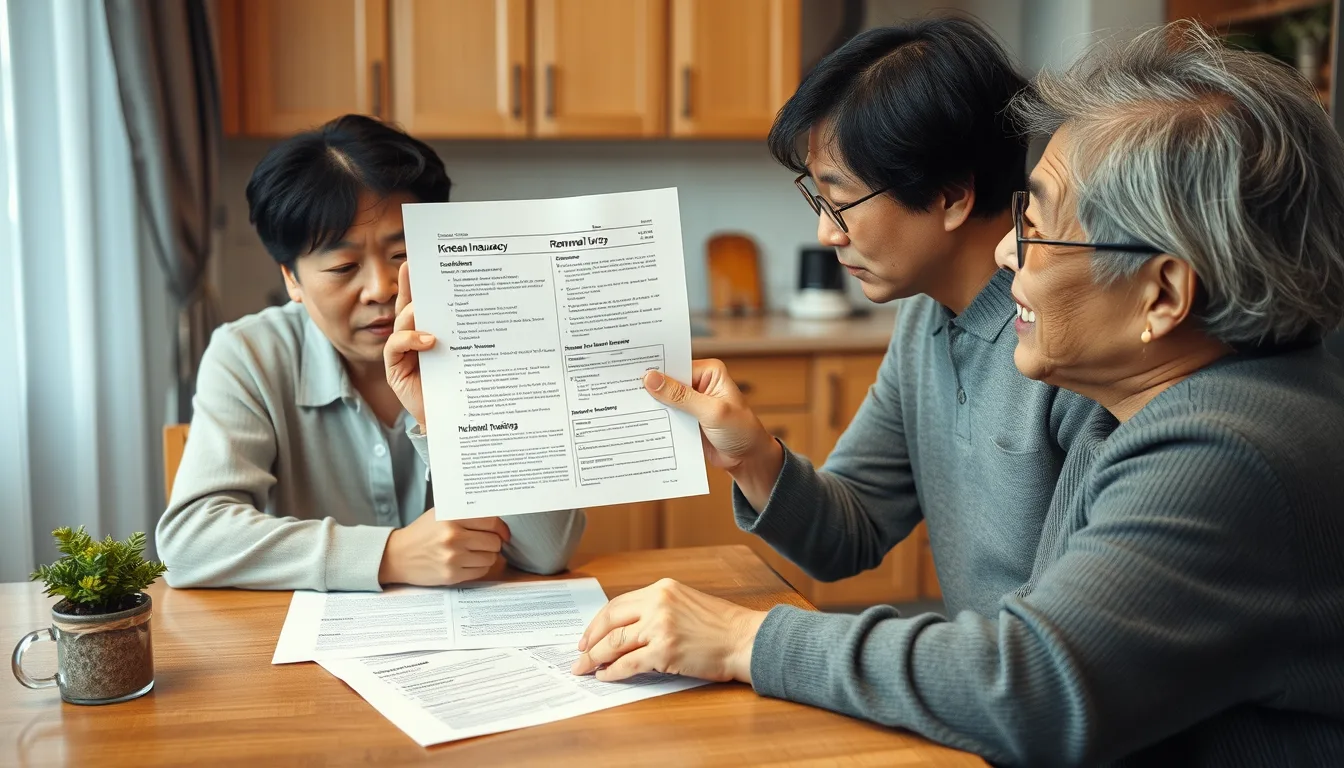
Before you sign an insurance contract in Korea, read three things in this order: the exclusions, the renewal terms and the cancellation rights. The premium comes last. Marketing material usually describes the main benefit, while the policy terms (약관) set the limits, so ask for the terms and a written explanation of the key coverage before you commit.
Start with the contract, not the advertisement
Ask for four documents: the application, the product description, the full terms and the explanation of key coverage. If you cannot read Korean comfortably, ask for the explanation to be given in a form you can have translated, and do not sign until you have understood the sections below.
The Korean press has described why this matters. Financial News, quoting the Financial Supervisory Service (FSS), reports that a contract can be cancelled within three months in cases of incomplete sales, such as not having the important terms properly explained, not receiving the policy documents or application form, or an unsigned application. In other words, the explanation and the paperwork are part of what a valid sale requires, so it is reasonable to insist on them.
Find the exclusions and limits
Look for the section that lists what is not covered, what is limited and what is subject to conditions. Common headings to look for, offered here as a reading guide rather than a list of rules in your policy, include:
- events or conditions the policy does not pay for at all;
- waiting periods before cover begins;
- reduced payment during an initial period;
- what you must disclose when applying, and what happens if something is missed.
Write each exclusion in your own words and ask the agent to confirm in writing whether your situation is affected. If an answer is vague, the policy terms govern, not the sales conversation.
Understand renewal before you compare premiums
An article in 1코노미뉴스 on renewal and non-renewal products, published in October 2026, explains the core difference. With a renewal-type policy (갱신형), the premium can be recalculated at set intervals to reflect factors such as age, risk rates and loss ratios. With a non-renewal type (비갱신형), the premium set at the start stays fixed for the agreed payment period.
The article warns against two shortcuts: assuming a renewal-type premium always rises, or assuming a non-renewal type is automatically cheaper. It says the real difference lies in how the premium is calculated, and that outcomes depend on the specific product terms, renewal cycle and payment period. So the right question is not “which is cheaper this month?” but “how is the premium recalculated, how long will I pay, and what is the total?”
Questions to ask:
- Does this product renew, and how often?
- What factors can change the premium at renewal?
- For how many years do I pay, and does coverage continue after that?
- Can the insurer decline to renew, or change the terms?
- What happens to my cover if I miss a payment?
Know your cooling-off and cancellation rights
According to Financial News and Namdo Ilbo, a customer can withdraw an application within 30 days of applying, but withdrawal is no longer possible once 15 days have passed since receiving the insurance certificate. Namdo Ilbo reports that insurers must refund premiums within three days of receiving the withdrawal request, with interest if delayed. Both articles list exceptions that cannot be withdrawn, including short-term policies of under a year and compulsory auto liability insurance, and Financial News adds policies that require a health examination and guarantee insurance for third parties.
These articles date from several years ago, so confirm the current periods and exceptions with the FSS or your insurer. The practical point stands: the withdrawal period is short, so check your documents promptly after signing, and record the date you received the certificate.
A pre-signing checklist
- Receive the terms, product description and key-coverage explanation.
- List the exclusions and waiting periods that could affect you.
- Confirm in writing whether the policy renews and how the premium is recalculated.
- Check what you must disclose and answer the questions accurately.
- Note the withdrawal deadline from your own dates.
- Keep copies of everything you sign.
- Ask how deposit protection applies. The Korea Deposit Insurance Corporation lists individual policies at insurance companies among the protected products, subject to its limits, so confirm the details at kdic.or.kr.
Common mistakes and what to verify
- Choosing by monthly premium alone.
- Believing a verbal summary instead of reading the exclusions.
- Assuming a renewal-type policy will keep the same premium, or that a non-renewal policy never changes in any way.
- Waiting until a claim to learn about a waiting period.
- Missing the withdrawal period.
If you believe a product was sold without a proper explanation, the FSS says it handles complaints and disputes involving insurance, and runs a dispute mediation committee with published settlement standards and case examples.
Rules change: confirm with the official bodies
This article is general information, not legal or financial advice. Policy terms differ by product, and rules on cancellation, renewal and disclosure change. Confirm the details with your insurer and with the Financial Supervisory Service, and consider an independent professional if the policy is significant.
Sources
- 보험 이럴 때 취소할 수 있다 – Financial News – withdrawal and cancellation periods, incomplete-sales conditions, exceptions
- 보험 청약철회권 15일이내, 30일이내, 3개월 이내? – Namdo Ilbo – cancellation periods, refund timing and exceptions
- 보험 가입 때 만나는 갱신형·비갱신형 – 1코노미뉴스 – how renewal and non-renewal premiums differ
- Complaints and reports – Financial Supervisory Service – scope of FSS complaint and dispute handling